
Why Do People Move From Church to Church?

Way back in 1982, an eclectic documentary came to theaters: Koyaanisqatsi.
Scored with a hypnotic Philip Glass soundtrack, it was unsettling in its barrage of images. Filled with time-lapse photography of busy city streets, subways, and factories—and having no dialogue—it reflected the meaning of its title: a Hopi word meaning "life out of balance." I remember seeing it at the Esquire Theater in Clifton in Cincinnati.
Much like the film, I’ve wondered what it would look like if I could hover over a city and time-lapse a video of people moving from church to church, like ants scrambling over anthills. If we’re honest, so much of any church’s particular growth is often lateral movement.
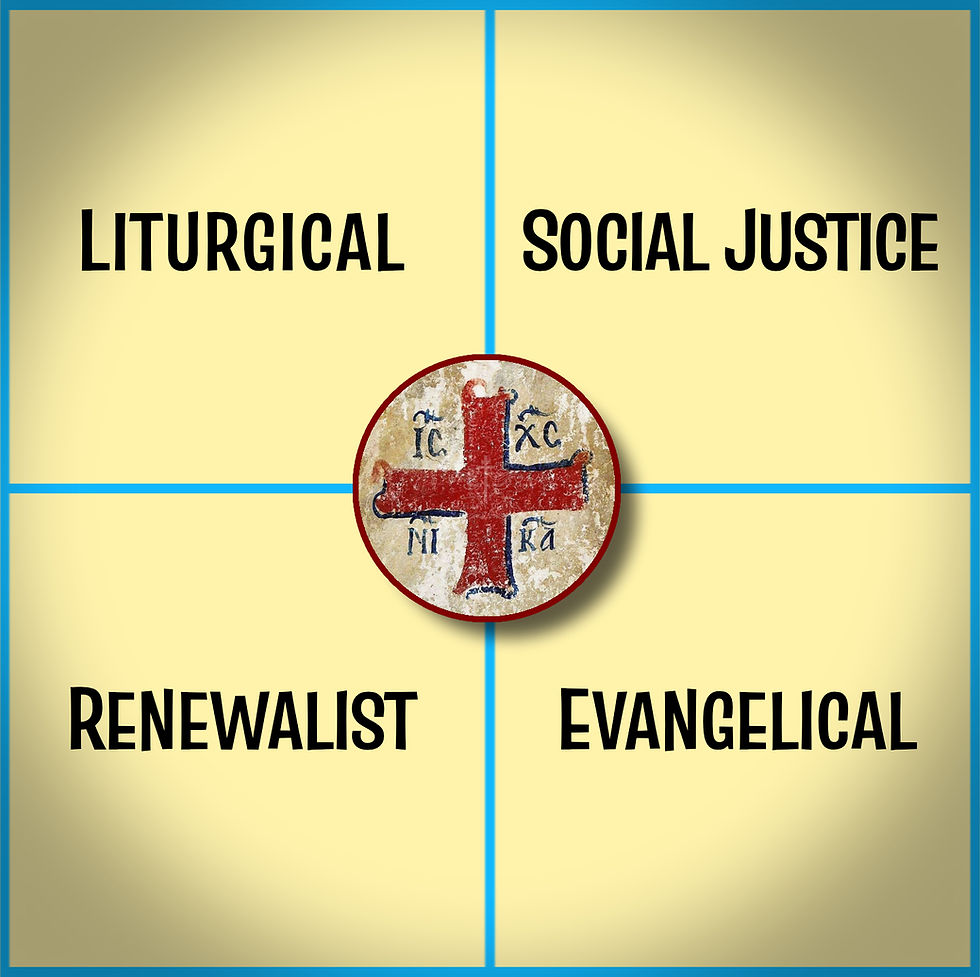
Years ago, I referenced the late author Phyllis Tickle’s construct of what the church looks like today. She divided it into four primary quadrants: Liturgical, Social Justice, Renewalist, and Evangelical. You can read more about that here.
But in my fifty-plus years of church observations, I think there are some generalizations about why people exit one quadrant for another.
For instance…
People who leave Evangelical or Renewalist churches and move toward the Liturgical model often find that their personal transrational experiences with God are enhanced with a new sense of mystery and contemplativeness. They may have tired of the showiness or platform of the pastors, and found that their church, which prided itself on being “led by the Spirit,” actually had a very defined liturgy that followed the same patterns week after week. They may also have a personal political bias that no longer fits with the positions their church held.
People who leave the Liturgical quadrant and migrate to Renewalist or Evangelical churches find that a personal experience has brought a sense of their faith becoming more real to them; they often have an experience with the charismata or a deeply personal “rebirth” experience and wonder why the liturgies or sacraments didn’t have more of an effect on them. Or, because of life’s circumstances—perhaps a divorce—they found themselves estranged by ecclesiastical polity and judgment.
People who left their quadrant and moved to the Social Justice corner may be tired of the exclusiveness or homogeneity of their church, or the “us and them” aspects of their community, and feel that real-world issues are not being addressed. They saw their particular tradition as ignoring vital problems in a broken world and spiritualizing everything to the point of irrelevance.
Or conversely, people exiting the Social Justice quadrant for a Liturgical or Renewalist corner may be tiring of activistic actions that have left their personal soul in a state of dryness—perhaps exhausted by continually drawing water from a well that has dried up. They may be longing for a personal experience with the Divine that serves a deeper purpose.
Maybe all these migrations are reflective of the spiritual seasons we go through as we seek meaning and a sense of purpose and fulfillment. The reasons for movement can be myriad. Humans are complicated, of course.
But we must ask the question as leaders: though we can’t be everything to everyone, are we missing certain deep needs people have? Or even more: the fullness of missio dei?
And can’t we be more than a single quadrant? Have we inadvertently become “corner dwellers”? Can we recognize where there are gaps in our spiritual formation methodologies? Even more, are we no longer birthing spiritual “babies” and bringing people into the Beloved Community who have been estranged?
How have we sought God in these complexities?
True leaders aren’t afraid of the hard questions. Or the changes needed to address them.
Dave Workman | The Elemental Group
Want to receive these weekly in your inbox? Subscribe for free here.



Comments